

How to get a new window sill from TOPSET
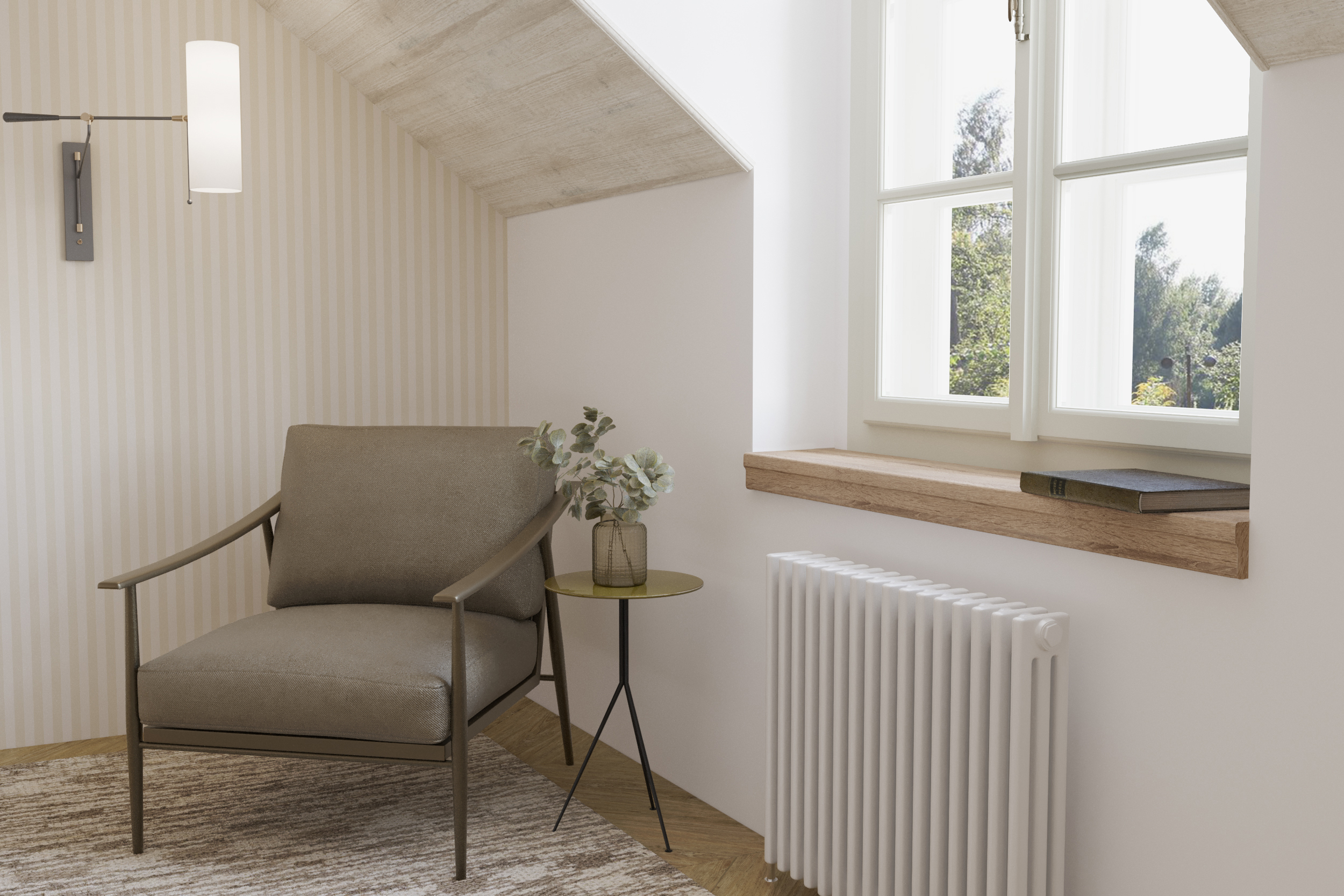
Do you think your interior could use a light boost, or are you replacing your windows and thinking the sills could be swapped at the same time? Or are you fitting out a new building? Then you’ve definitely come to the right place! You will learn everything you need to know about the selection, measuring and installation of the window sill itself – and probably a large part of what you didn’t even know could be known.
How to choose a window sill
When buying new windows, we often pay attention only to the windows themselves, but the combination with the window sill is what ultimately creates the overall visual impression in an interior. But make no mistake, when considering window sills it is necessary to think about more than just the decor. Don’t worry, we will be happy to guide you through the entire selection process and parameters.
1. Straight or widening window opening?
You will probably only have to deal with this issue when fitting out a new building. Naturally, it will be easier to have side walls that are all straight. However, a window opening that widens as it moves away from the window can help visually enlarge and illuminate both the window itself and the entire room – and technologically, of course, this is possible in terms of the wall and the window sill.
2. To cut in or not to cut in? That is the question!
The question is not existential, rather one of position. We are talking about “embedding” the window sill in the side walls. This issue is also likely to be dealt with in a new building, as cutting out sections for the window sill entails a need to level and paint the wall.
The advantages of a window sill cut into the wall are mostly aesthetic, but also slightly functional – the way the sides of the window sill are fixed can help protect the window sill from being torn out of place. The difficulty of any future replacement may be a disadvantage.
In addition, cut-out sections can be a solution for window sills placed in a widening window opening – here, on the contrary, they will simplify future replacement, where it will be possible to use a rectangular sill without the need to format it into a trapezoid.
3. Material
In terms of the material a window sill is made out of, there are many options, such as aluminum, wood and artificial stone. We would be so bold as to rule these out at the start, as they are not the best options. Aluminium does not fit very well into an interior. Wood is not a suitable material for a window sill, due to its pronounced reaction to moisture. And artificial stone, although relatively favorable in terms of properties and price, only has stone decors (not as a uniform pattern, but mostly as a mosaic) and is very cool to the touch.
But let’s talk about the main players in the window sill market – chipboard and plastic. As manufacturers and sellers of chipboard window sills, we will naturally recommend these sills, because we strive to deliver the highest quality products. But let’s take a look at why:
Properties of plastic window sills
+ Low price
+ Total moisture resistance
+ Low weight
+ Maintenance-free
- Smaller choice of decors, which do not look natural
- Unsuitable above heating units
- Low load resistance
- Unsuitable for larger overhangs
- Colour changes due to UV radiation
- Manufactured only in a profile with a nose
Advantages of chipboard window sills
+ High load resistance
+ large selection of decors – wood, stone and single-color
+ Suitable above heating units
+ Selection of profiles with or without a nose
+ Maintenance-free
+ Color fastness (resists UV radiation)
+ TOPSET laminate on the surface is extremely durable
+ Option of installation on brackets in case of a large overhang
- Higher weight
- Higher purchase price
- Lower resistance to moisture, risk of swelling – however, this only applies to ordinary chipboard, TOPSET window sills are made of high-quality moisture-resistant chipboard and with proper finishing of the sides during installation, the moisture resistance is very high
4. Profile
And since we chose a window sill made from high-quality TOPSET chipboard in the last step, we can proceed to choose a profile. This is purely a design decision. Choose so that the window sill fits into your interior as much as possible. You can choose from 6 profiles according to the following criteria:
· with/without a nose
· with a short/long nose
· with a straight nose/nose with transition
· with a rounded/sharp top edge
5. Decor
The chosen decor should match the color of the wall, but first and foremost the window frame, as they are the nearest neighbours. However, this does not necessarily mean that the decor has to be identical. You can create a natural contrast and, if the window frame is very dark, brighten the window with a lighter window sill. The whole thing is just a matter of your own taste, although it is generally recommended that the window sill should not dominate the interior visually.
How to order a window sill?
Before ordering your new window sills from the TOPSET e-shop, you need to know the dimensions. When ordering, you then have two options – either enter the precisely measured dimensions and have the window sill made to measure (which will take a little longer) or choose the next size up and shorten the sill after delivery. Also, when ordering, do not forget protection of the sides and get plastic caps or laminate tape. You will also need low-expansion foam, Chemoprene glue (if you choose laminate tape to finish), acrylic sealant and silicone – either transparent or in the base colour.
Measurement of the window sill width
To measure the overall width of the window sill, it is necessary to measure the depth of the sides (from the underlying profile under the window frame to the edge of the base wall). Measure in a straight line from the window frame on both the left and right side and expect one dimension to be larger, as it is possible that the wall may not be completely straight or the window may not be installed precisely. We mark the dimension measured as D.
Calculation of total width
A) We want a window sill with a nose – STANDARD, DESIGN, LONG or STYLE profiles
Add the width of the nose (i.e. 25 mm) and the overhang (according to your preference 5–35 mm) to the measured dimension D, giving a total of 30–60 mm, depending on how much you want the window sill to stick out into the room. If you want it to stick out a long way, it is necessary to use brackets.
B) We want a window sill without a nose – LINEAR and SLIM profiles
Add an overhang of 10 mm to the measured dimension D, we recommend an overhang to cover any unevenness in the edge of the base wall.
Example
The depth of the sides was measured on the left as being 150 mm and on the right as being 148 mm. My D = 150 mm. I want to fit a window sill with the LINEAR profile. My resulting width is therefore 150 + 10 = 160 mm. When ordering a window sill, I have 2 options:
1. I choose a standardized width of 200 mm and shorten it to the appropriate dimension when installing the window sill
2. I input the exact width of 160 mm.
Window sill length measurement
To measure the total length of a window sill, it is necessary to measure the width of the window opening (from left to right). If you are going to cut the window sill into the wall, measure the entire dimension, including the cut-out sections (or add 2× the estimated depth of a cut-out section to the measured width). It is necessary to measure the width of the sides close to the window frame as well as directly on the edge of the base wall (in case the walls are not completely straight), again use the largest measured dimension, which is marked as W.
Calculation of total length
A) If the sides of the window sill will be finished using plastic caps
Subtract 6 mm from the measured dimension W.
B) If the sides of the window sill will be finished with iron-on edges or laminate tape
Subtract 1 mm from the measured dimension W.
Example
The width of the sides was measured at 920 mm by the window frame and 925 mm at the base wall edge. Sections with a depth of 10 mm will be cut into the wall. My W = 925 + (2 × 10) = 945 mm. I will use plastic caps for the edges, so my final length is 945 − 6 = 939 mm. When ordering a window sill, I have 2 options:
1. I choose a standardized length of 1,000 mm and shorten it to the appropriate dimension when installing the window sill
2. I input the exact length of 939 mm.
I have ordered, what next?
At this point, the installation itself is next. In addition to all the necessary materials from the shopping part, you will also need the following tools:
· ruler and pencil;
· ordinary piece of woodworking machinery (mitre saw, jigsaw, format saw, ...) with the appropriate cutting tool;
· iron saw or fine-tooth saw, if plastic or expansion caps are to be used;
· sharp knife and sandpaper with a roughness 120 or finer if edge tape is to be used;
· cartridge gun and joint squeegee;
· spirit level.
And then just follow these instructions:
1. Unpacking
· Make sure the package is not damaged in any way.
· Remove the packaging so as not to damage the goods inside.
· Check that you actually have the order you made and that the products are not damaged in any way (see complaints rules).
2. Check on the environment
· Room air temperature – The window sill is designed for common interiors where the temperature is around 10–25 °C, even during installation the temperature should not vary too much due to expansion (change of dimensions) of the material.
· Humidity – Although TOPSTEP window sills are waterproof, this only applies after step 5 of this manual. Therefore, ensure that the humidity does not exceed 50 ± 5% during installation.
If the window sill is being installed in a new building, we recommend using a vapour barrier. If the interior temperature fluctuates too much, expansion of ± 2 mm per 1 m of material is possible.
3. Base preparation
· The base must be flat, dry and free of dust and dirt.
· The base should support the window sill along its entire length.
· The window sill area should be inclined from the window frame towards the room by about 2°, to prevent condensation from being retained by the window. Check with a spirit level, crosswise the sill should be horizontal.
· The recommended height of the space between the base wall and the top groove for a window sill for a Euro window / the top edge of a plastic window base profile is such that the window sill can be pushed in at the appropriate tilt.
To level the plane or set a sufficient tilt, it is necessary to use leveling inserts (wooden or plastic). If the space for inserting the window sill into the window frame is not suitable or does not have a groove, we recommend using an L or U profile.
4. Formatting the window sill
· Measuring – Measure the window sill according to the measuring instructions (link), but in this case it is necessary to pay attention to the specific shape, which does not necessarily have to be rectangular (for example, if the window is incorrectly fitted or because of side walls that are not straight). Measure to the nearest millimetre and do not forget to subtract the appropriate dimension from the length according to the end pieces and add the appropriate overhang to the width.
· Cutting the window sill – Use conventional woodworking tools (mitre saw, jigsaw, format saw, ...) with the appropriate cutting tool to cut the sill to the measured dimensions and always cut from the side with the nose to prevent chipping of the material. Ensure you work safely.
If a jigsaw is used to cut the window sill, we recommend using plastic caps to cover the side edges, to hide any unevenness. Even the caps need to be formatted to the required length – use either an iron saw or a fine-tooth saw to cut them. One piece of the standard two-sided cap is U-shaped and is designed to be cut into 2 parts (left and right sides of the window sill). If the caps are intended for a window sill up to 310 mm in length, one cap piece is sufficient for both sides of the sill. If the window sill is wider, 2 double-sided caps per 1 window sill should be purchased.
5. Treatment of the sides
All cut and otherwise unprotected surfaces must be protected against residual moisture from the brickwork to ensure the window sill has a long service life.
· Back – The back by the window frame should be treated to stop moisture getting in, if the standardized size was shortened (if not, then the back has already been treated). Iron-on/laminate tape, varnish, paint, ...
· Sides – Choose one of the options for the side edges:
o Plastic caps – Apply a thin layer of silicone over the entire surface of the inside of the formatted cap to protect the cut surface from moisture and ensure that the cap holds better.
o Edge tape – The tape is supplied with a layer of adhesive applied, which is activated using an iron.
o Laminate tape – A layer of Chemoprene glue must be applied to the tape and the side of the window sill. They are then pressed together as hard as possible after the adhesive has been ventilated.
When gluing with any tape, glue either exactly or preferably with an overlap. Cut off the excess material with a sharp knife and clean the edge with fine sandpaper (120 grit or finer).
If it is necessary to adjust the window sill length or cut a joint to an angle, it is necessary to use an expansion cap (if not used, there is a risk of future expansion of the joint due to dilatation). Despite the use of an H joint, we recommend treating the window sill at the joint site against moisture.
6. Installation of window sill
· Final dry test – Insert the modified window sill into the prepared groove by the window frame (at least 8 millimeters) and check that all requirements from step 3 have been met. The gap between the bottom edge of the groove and the base should not be more than 30 mm.
· Gluing – Moisten the base with water in a spray bottle and apply a sufficient layer of low-expansion foam. Put the window sill in the appropriate place and press into the foam, fix for 30 minutes.
If there is a deep radiator recess by the window, the entire surface of the window sill does not lie on the base or there is a requirement to increase the sill area, suitable brackets should be used according to the expected load and the dimensions of the window sill. Attach the brackets to the window sill with screws – choose the screws so that they do not show on the top side of the window sill, they should be screwed no more than 10 mm into the board. Then install the prepared window sill according to the procedure specified above.
7. Finishing works
· Silicone – Use silicone to seal the joint between the window sill and the window frame – preferably transparent, if the window and window sill have the same decor, you can also use the decor color. Using a cartridge gun, press the substance into the joint and then moisten it with detergent (water with washing up liquid) and use a spatula to smooth it. Allow the silicone to dry.
· Acrylic sealant – Apply acrylic sealant to the joints between the window sill and the wall. Unlike silicone, it can be painted over.
Do not use an abrasive paste to clean the window sill in any case, as this may damage the surface of the laminate and result in moisture penetration.
In conclusion
It may seem a lot, but don’t worry, in practice, installation is quite simple and quick. Plus, after reading all this, you are already theoretical experts on window sills! So go ahead and beautify your home with a new TOPSET window sill!
